FOR LENDING/BNPL - cCD2 scoring
CCD2 compliance starts with data you can trust
Tapix turns raw PSD2 transaction data into verified income, categorised expenses, and surfaced risk flags, feeding your existing scoring engine the inputs CCD2 actually requires.
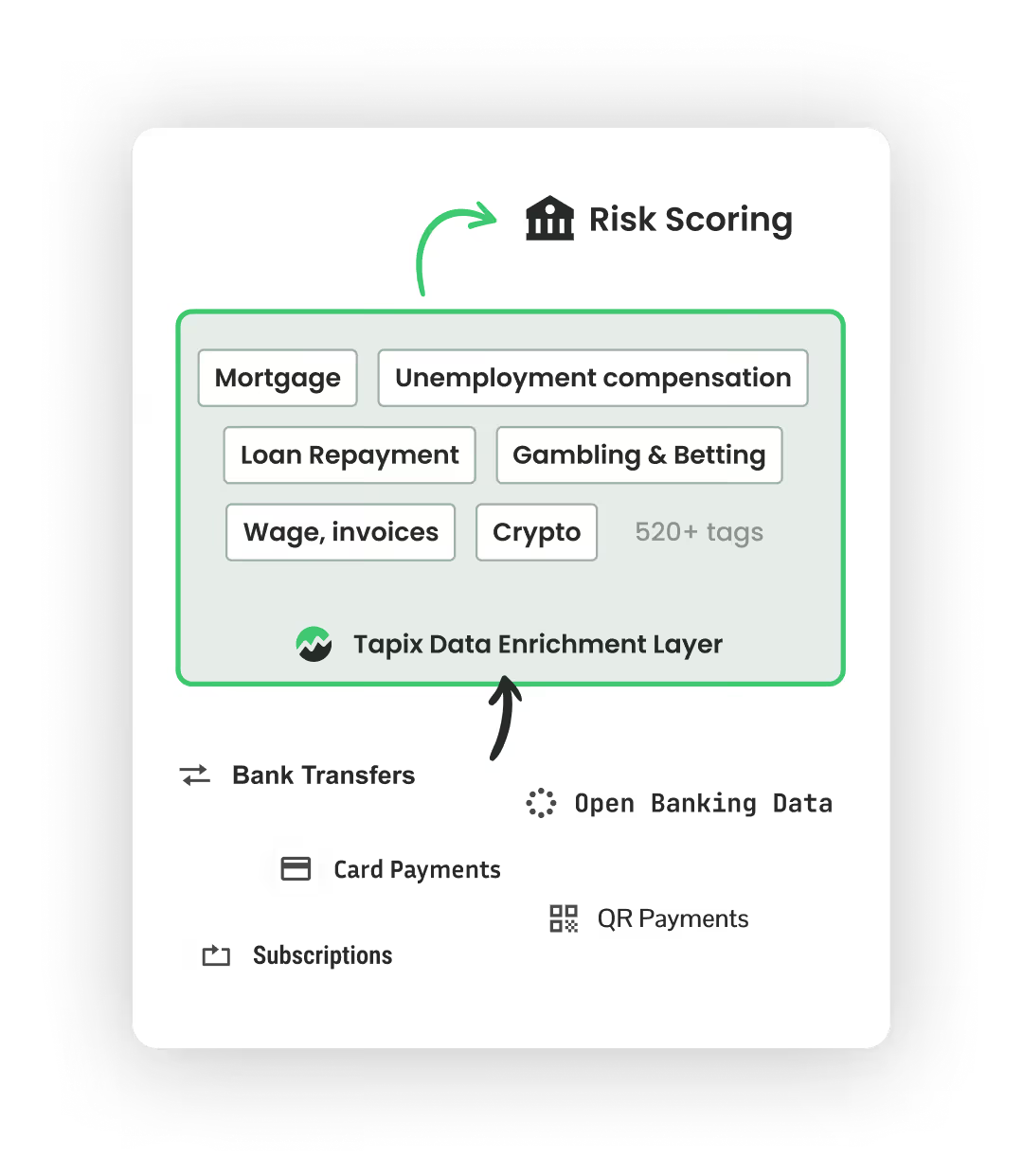









CCD2 requires verified income and categorised expenses for every applicant, including micro-credits under €200. Without automated categorisation, your team is manually triaging hundreds of transactions per case.
Risk indicators are hiding in cryptic strings. Gambling, payday loans, and crypto transfers are decisive CCD2 red flags. In raw open banking feeds, they show up as "CRV*OPTMOBLCOFI.HU". Your scoring model can't flag what it can't read.
Tapix brings banking-grade quality to open banking data
We bring banking transaction enrichment refined across 60B+ enriched transactions to the open banking world, turning raw PSD2 feeds into the structured signals your scoring engine actually needs.
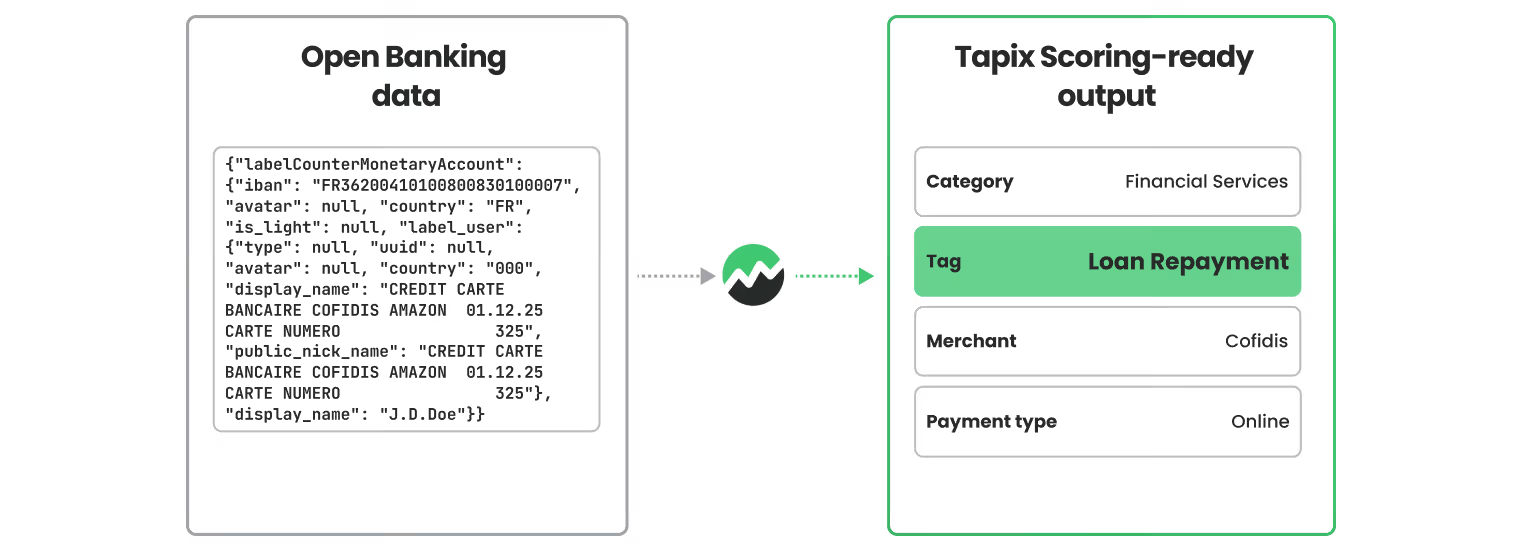
From raw PSD2 feed to scoring-ready inputs
in one API call
in one API callTapix turns unstructured transaction description into structured income, expense, and risk segments
your existing models can actually use.


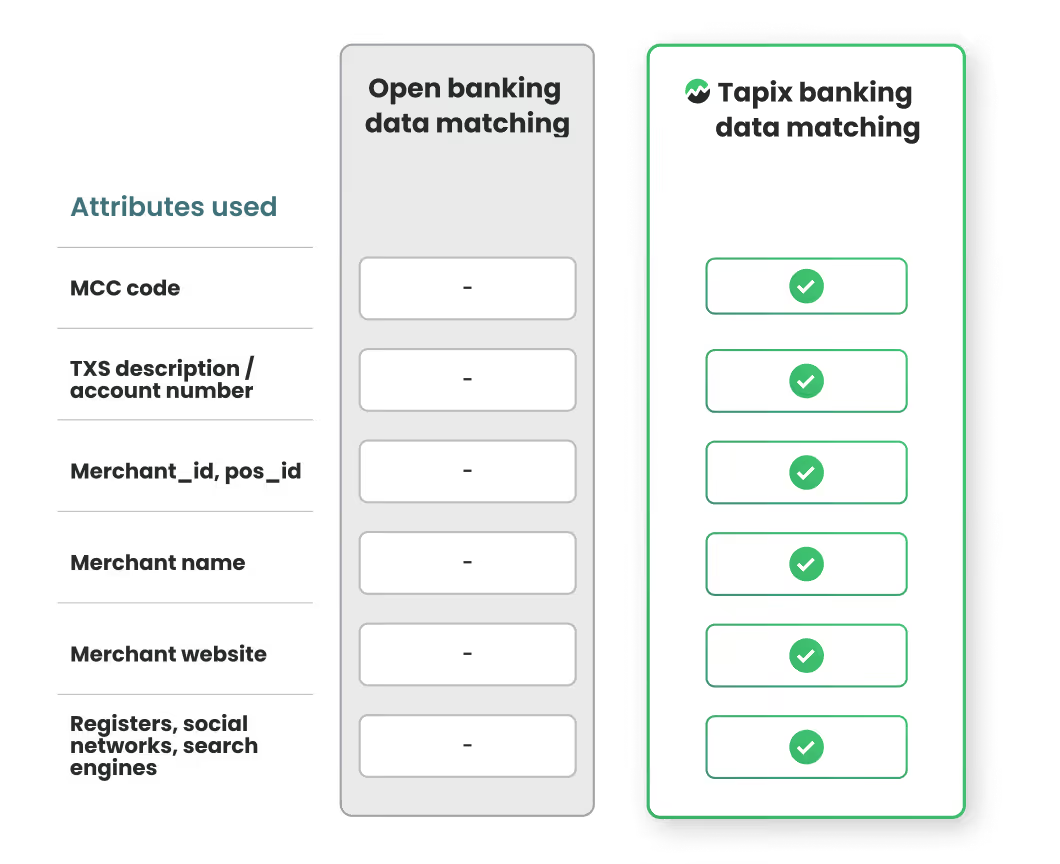
Read thin PSD2 data with issuer-grade intelligence

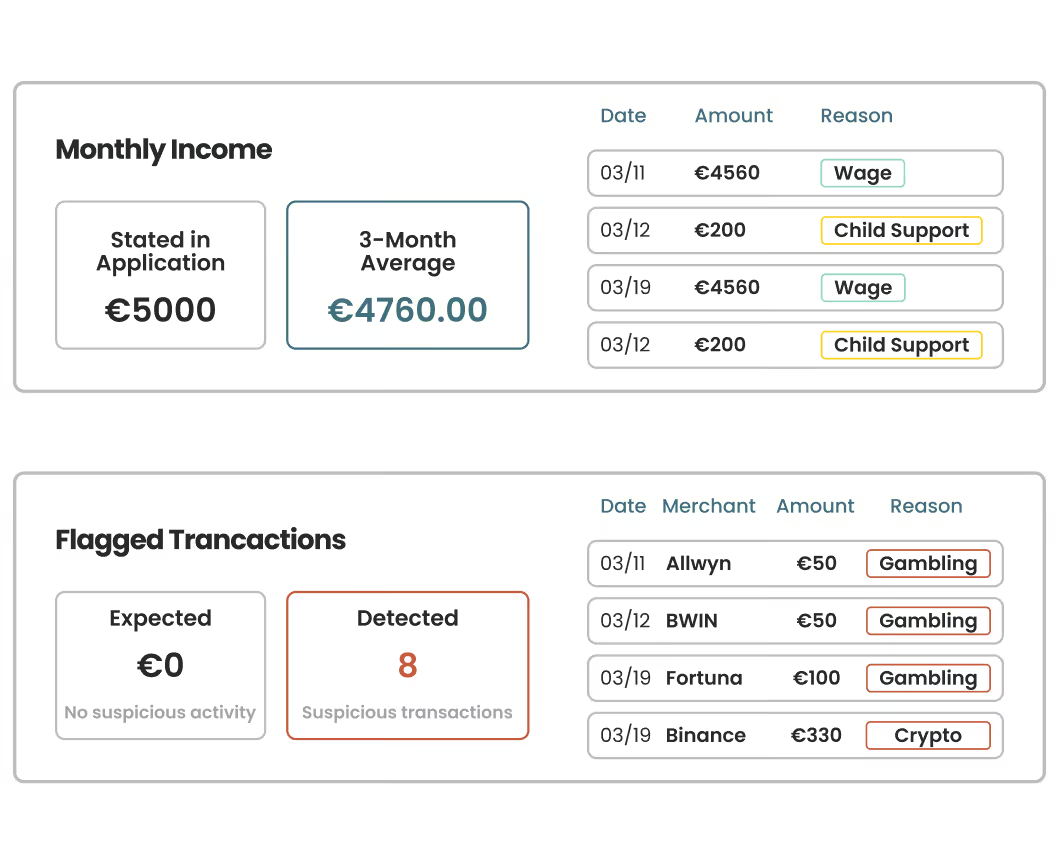
Turn raw data into CCD2-ready segments
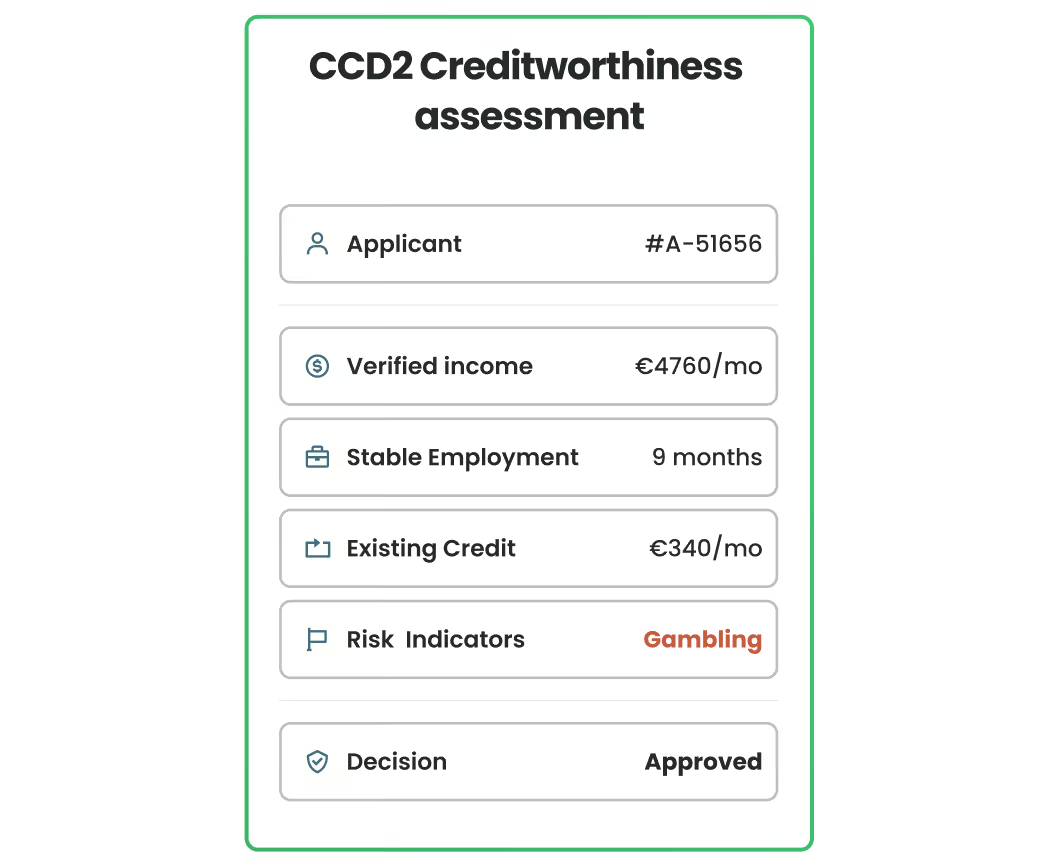
Feed your existing scoring engine
From compliance burden to competitive advantage
CCD2-ready data doesn't just satisfy regulators. It speeds up underwriting, surfaces hidden risk, and reveals which products to offer next.

Hit CCD2 compliance without rebuilding your stack
Structured income, expense, and risk-flag data flows directly into the scoring engine you already run. Meet creditworthiness-assessment requirements out of the box, even for micro-credits under €200.

Catch risk signals you're missing today
Gambling spend, irregular income patterns, payday-loan obligations, and hidden recurring debits surface automatically. No analyst flagging, no cryptic merchant strings slipping through.

Cut time-to-yes and lift conversion
Automated enrichment removes the manual review bottleneck. Underwriting gets faster, onboarding gets shorter, and more applicants make it from "applied" to "approved."

Cross-sell with intelligence
The same enriched transaction data that satisfies CCD2 reveals each customer's spending preferences and financial behaviour. Right product, right customer, right moment, from data you were already required to collect.
.webp)
.webp)
.webp)
.webp)
Tapix’s CCD2 data enrichment operates as a structured API layer delivered via secure REST API integration. Review the data model, endpoints, integration patterns, and security approach in the technical overview
Open banking data for CCD2 credit worthiness assessment FAQs
Bring more value to your users through enriched payment data
We don't run a scoring model ourselves — instead, we provide you with transaction categorization that feeds into your own risk scoring. This means the scoring methodology, and any related fairness/discrimination governance and audits, sit within your own risk framework, where you retain full control and visibility.
Yes. We partner with a regulated AIS (Account Information Service) provider, so you get connectivity and enrichment through a single integration. You simply implement our SDK, which already includes the AIS iframe — meaning one API, one front-end element, one contract, and one SLA to manage.
It varies significantly — by transaction type, by country, and by data source. Even within open banking data, results can differ depending on how much (and how) information a given bank shares, and each AIS provider can further transform or drop data along the way.
It's also worth distinguishing between two categories: "unenrichable" transactions, which simply don't contain enough information to ever be enriched, by us or anyone else, and "unenriched" transactions, which do contain information, but not information that leads to a successful enrichment.
A good example is A2A (account-to-account) transactions, especially between two peers: these often contain only IBANs, a booking date, and an amount/direction, and IBANs are notoriously difficult to tie to a specific account holder.
In practice, we typically see 1–8% unenrichable transactions (depending on your data sources) and 10–30% unenriched transactions.
We measure accuracy against a golden dataset, hand-annotated by human reviewers, that is built to reflect real-world outcomes as closely as possible.
Pricing depends on the use case. For merchant recognition, you pay per transaction, based on tiers — the price per unit decreases as volume grows. For B2C/B2B transaction categorization (scoring input), you pay per client (whether a company or a consumer), and each client can have multiple accounts; the same tiered, volume-based pricing logic applies here too. Pricing scales predictably, and the standard commitment period is 12+ months.

Pavel Prucek
Head of Product at Twisto
See Tapix in Action
30-minute walkthrough with a live demo tailored to your lending model and transaction data. See how Tapix turns raw payment records into CCD2-compliant creditworthiness inputs – using sample data that reflects your real-world scenarios.