AI assistants in banking arrived as a wave: three banks shipped consumer-facing assistants inside twelve months, and to a product manager being asked whether their own bank needs one, they look like a single trend. They are not. Measured on three dimensions (what the assistant is allowed to do, what it is allowed to see, and the route each bank took to ship it), bunq Finn, Starling Assistant and Revolut AIR turn out to be three different products, and the differences change what can go wrong with each.
This article sets them side by side.
Three live assistants, and why these three
Both sides of the market are building, but they are building differently. Among the traditional banks it is mostly through partnerships: Barclays with Microsoft, NatWest with OpenAI, HSBC with Mistral, with NatWest going furthest by shipping its own agentic assistant in March 2026. These are the same incumbents that top CB Insights' AI Readiness Index for Retail Banking, which ranks the top 20 retail banks in North America and Europe on how actively they build, partner and hire to operationalise AI. It is a useful ranking to watch for who is investing, but it scores readiness signals from public filings, not the quality of anything a customer can actually use.
The neobanks are the ones that put a customer-facing assistant in front of users first, and that is a different kind of progress than the Index captures. So, this comparison focuses on the digital challengers: bunq, Starling and Revolut, all three consumer-facing and live.
What the assistant is allowed to do
The quickest way to separate them is by what each one is not allowed to do. Finn answers but does not touch the account. AIR carries out actions but only ones the customer could already reach in the menu. Starling Assistant is the only one that will move money and change settings off its own initiative. Those boundaries are what set them apart, and each boundary sets a different failure mode.
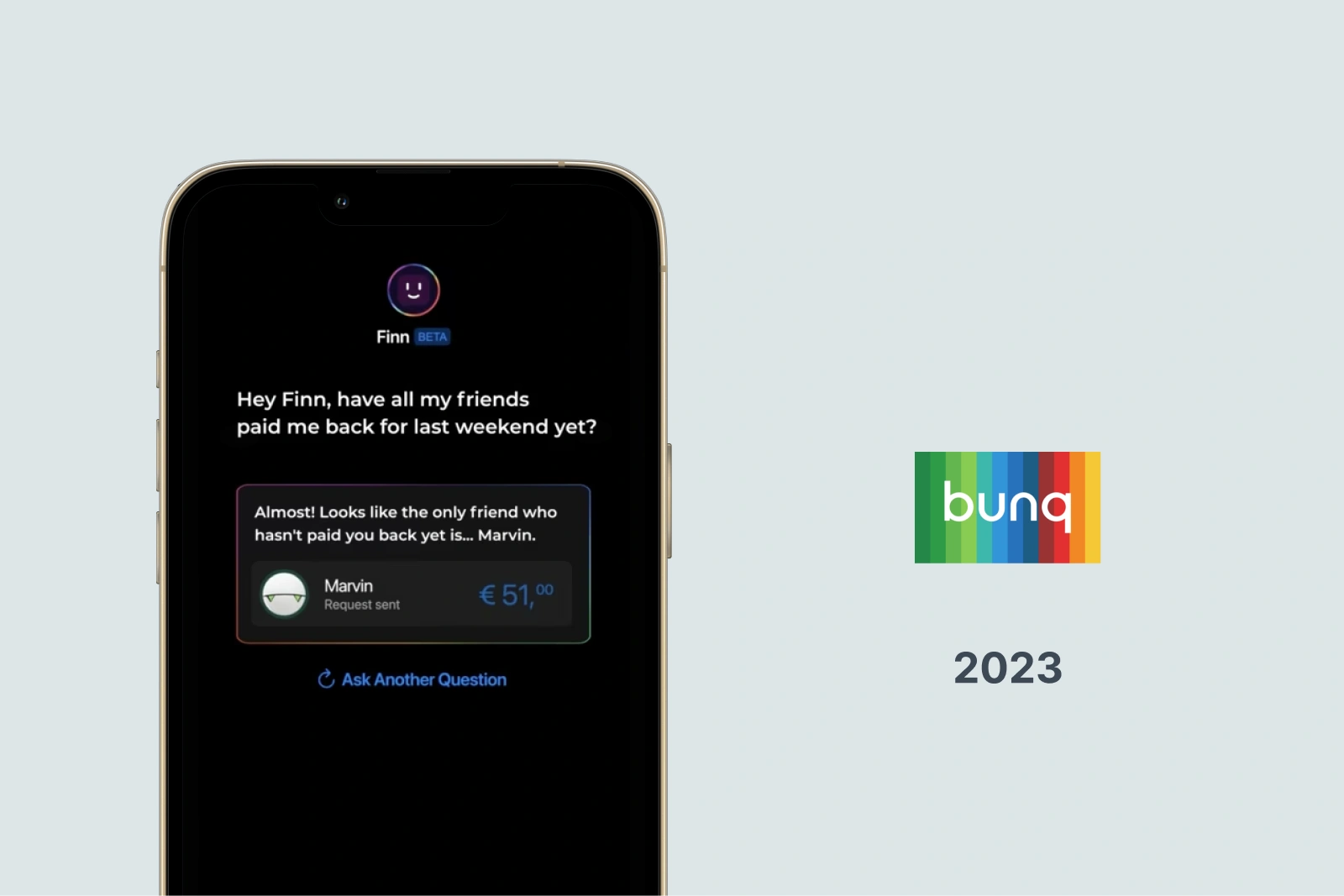
Finn answers and routes. It handles support and product questions, resolving them in around 47 seconds across 38 languages, with real-time speech-to-speech translation on calls, and escalates to a human specialist when it cannot. What it will not do is act on the account: nothing moves, nothing changes. Its worst outcome is therefore a wrong answer or a bad handoff, never a wrong transaction.
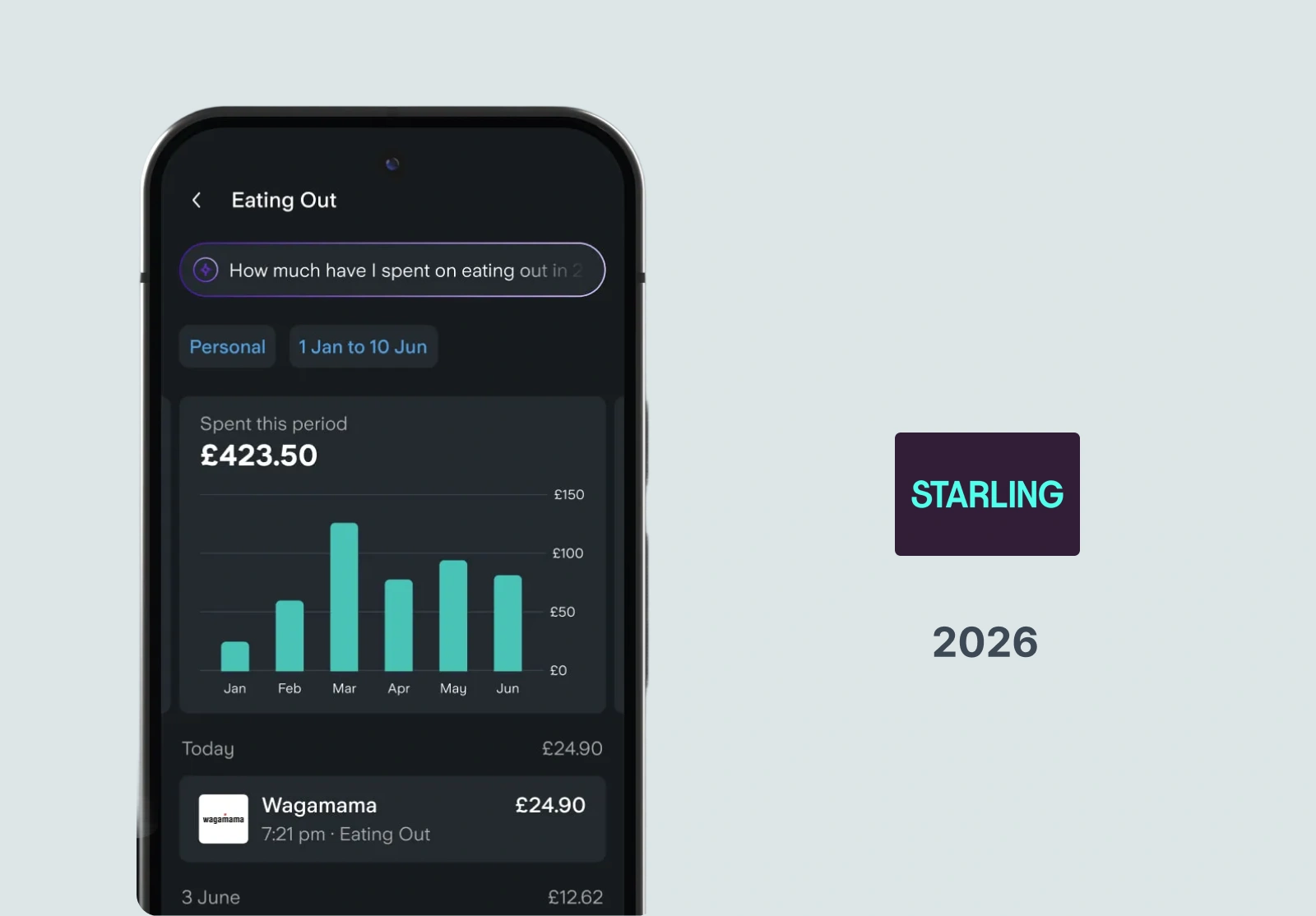
Starling Assistant acts on the account. A customer can ask it to set aside GBP 500 for a Paris trip by July, and the assistant creates the pot and the recurring transfers that fund it. It sets up savings goals with automatic transfers, organises bill payments, allocates budgets across Spaces, and replaces cards. It is the only one of the three that originates changes to money and settings, so its worst outcome is a wrong action taken, not just a wrong answer given.
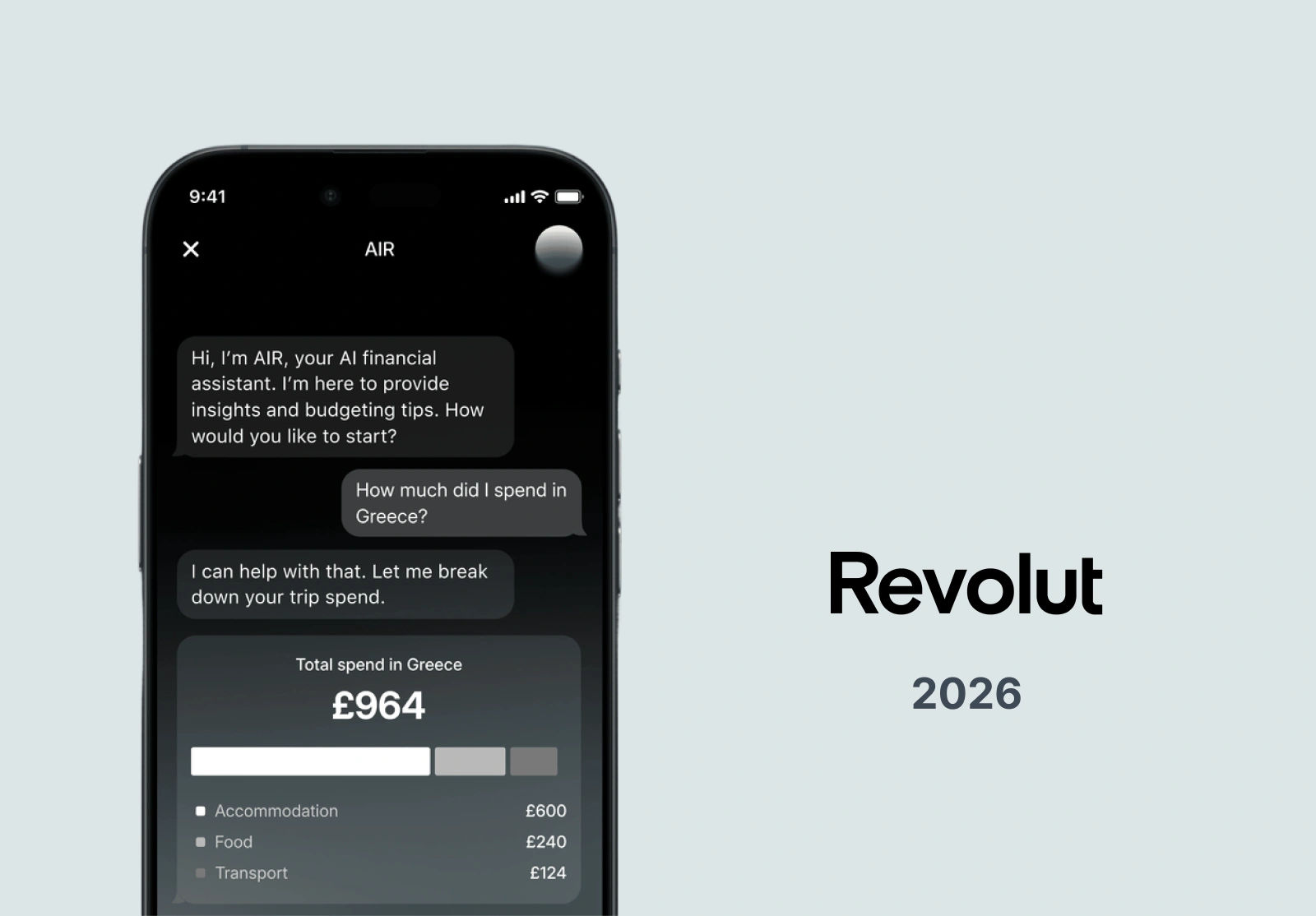
Revolut AIR navigates. It does what the app menu did, reached through conversation instead of taps: freezing a lost card, setting spending limits, cancelling a subscription, checking investments, buying an eSIM. It can execute consequential actions like a card freeze, which puts it closer to Starling than to Finn, but crucially it only operates over functions the customer could already reach and see for themselves, which narrows the blast radius of a misfire.
None of these three is better than the others here. Each has drawn its line in a different place, trading reach against the cost of getting something wrong.
What the assistant is allowed to see, and who supplies the model
Permission is one half of the risk picture. Visibility is the other: what data the assistant can read, where the model runs, and who built it. Each bank answered that governance question differently, and the level of disclosure varies as much as the architecture.
bunq built Finn in-house on Amazon Bedrock, using Anthropic Claude models with retrieval over OpenSearch Serverless, and published the architecture through an AWS case study, a router-based design feeding an orchestrator, with session state in DynamoDB, taken from concept to production in three months. Starling runs Google Gemini inside its own Google Cloud environment, opt-in, with customer data explicitly kept out of model training and held within Starling's cloud. Its earlier Spending Intelligence feature drew only on Starling account data and offered no financial advice, a boundary set by regulation.
Revolut sits at the other end of the disclosure range. It states a zero data retention policy with its third-party AI providers and limits AIR to data the customer already sees inside their own app, covering transactions, cards, investment holdings, but it has not disclosed which AI providers it uses.
How each bank got there
The third dimension is the route. Lay the timelines side by side with dates rather than adjectives, and three different strategies appear.
Starling shipped a ladder. Spending Intelligence went live in June 2025 as a natural-language interface over spending data. Scam Intelligence followed in October 2025, handling image-based marketplace scam checks. Then on 20 March 2026, Starling Assistant folded both into a single interface. Three dated releases, each narrow, consolidating into one.
Revolut announced a destination and took roughly seventeen months to reach it. The concept was unveiled at its "The Revolutionaries" event in November 2024. In June 2025, its UK CEO said the assistant would go live shortly. It launched on 9 April 2026. bunq took the opposite approach: it shipped Finn in December 2023 and has iterated in public since, through to its December 2025 release. Ladder, announcement-then-wait, and early-ship-then-iterate: three distinct ways to put the same category of product on a phone.
Reach is a separate question from launch. bunq describes Finn as serving its user base, reported at 20 million. Starling Assistant went to personal current account holders first, with business and joint accounts to follow. Revolut AIR rolled out to its 13 million UK customers, out of more than 70 million globally, UK only, with expansion described as "soon" and no markets or dates named. All three are live. None of the three is fully rolled out.
What every one of them reads from
The three products diverge at the interface and converge underneath.
Picture one customer question. "What was that recurring charge, and does it renew next month?" To answer it, the assistant needs four fields from the transaction feed: the merchant's clean identity, the category, whether the payment recurs and at what frequency, and the location. If the underlying feed returns a raw acquirer string instead of a recognisable merchant, or misses the recurrence pattern, the assistant cannot answer well no matter how capable the model on top of it is. This is the argument Tapix has already made end to end on chatbot data quality, and on the specific fields a spending answer requires.
Recurring-charge questions in particular lean on reliable subscription detection.
What none of them has published
There is one dimension where only one of the three has said anything at all: whether the assistant is working. bunq publishes operating figures. Around 97% of support activity is handled by Finn, and per the AWS case study 82% is fully automated. Alongside those, bunq reports the 47-second resolution time and 90% user satisfaction. Starling and Revolut have not published usage or adoption numbers yet.
So the only measured outcome in the category so far is support automation, and support automation is not the same as adoption. Knowing that a bot resolves most support tickets is genuinely useful, but it does not tell you whether customers have taken up the assistant as the way they bank. A handful of figures would make that far more interesting to follow: the share of monthly active users who engage the assistant, the share of sessions that start there rather than in the old menus, and what happened to the channel the assistant was built to replace. As these products mature, those are the numbers worth watching, because the real contest, over whether any of them becomes the default way people manage their money, is still open.
The three assistants will not converge just because they share a label. A product team deciding whether to build one is really deciding which of the three trades to make.
