Banks hold the richest behavioural data of any industry - every purchase, every transfer, every recurring obligation. And almost nothing they build with it feels personal. Sentient design is the model that would change that: interfaces that observe the user, infer what they need, and act before being asked. The model is real, the early examples exist, and bank product teams are starting to ask how to implement it. But every sentient moment depends on something most banks still don't have under control: clean, enriched transaction data that the AI can actually read.
But first, you have to start with small steps. So we sat down with Ergomania's design strategist to learn how.
First, set the rules. Then follow
Adam Dragus, Design Strategist at Ergomania, works with bank product teams across Europe on the next generation of digital banking experiences. The concept of sentient design itself was named by Josh Clark, an American agency owner who articulated it as a design model for AI-native interfaces. Adam has been bringing it into the banking conversation, and into the rooms where banks are deciding what their apps should actually do next.
His starting observation is uncomfortable. Banks sit on enormous amount of behavioural data that no consumer tech company can match. Yet what they ship feels generic. The reason is not a lack of data particularly, but a lack of a model for what to do with it.
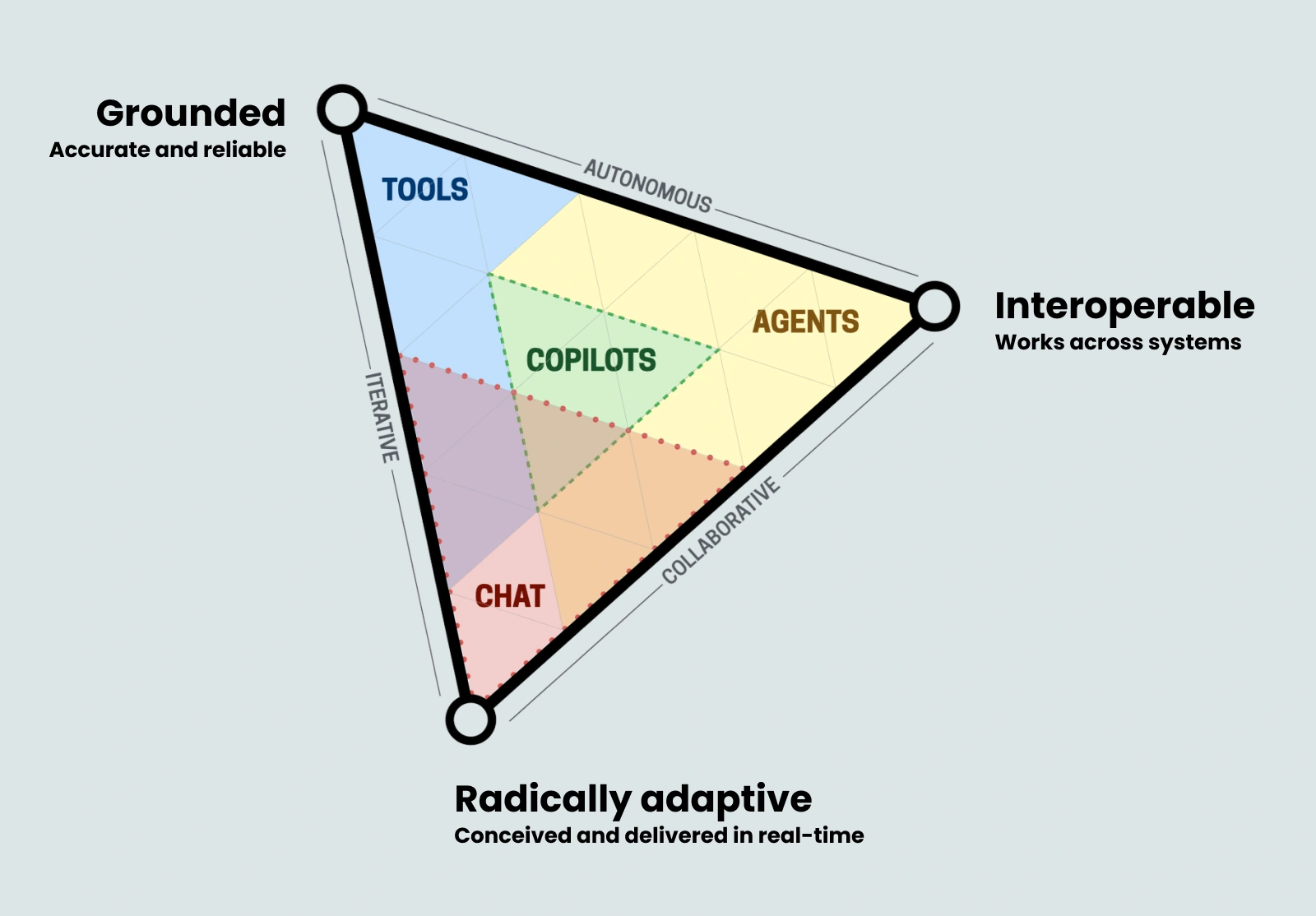
The model itself comes down to a role shift that defines everything else. "Until AI, the user was in the commander role," Adam says. "You knew what you wanted, you found the right screen, you executed." With AI as the underlying layer, the user moves from commander to curator. You set direction, preferences, and limits. The system navigates. The interface becomes a layer that operates on your behalf.
That shift is what makes sentient design different from every personalisation effort banks have tried before - and what makes it harder to build than most product teams expect.
The first level of sentient design is not the full autonomy
The mistake Adam sees most often is banks imagining sentient design as a fully autonomous AI agent that runs the customer's financial life. That is the destination, maybe. It is not the entry point.
"You don't start with full autonomy," he says. The first level is what he calls "happy little surprises" - small, unexpected moments of helpfulness that don't involve money or decisions. Just advice or context. Just something useful the user didn't ask for. Notice a regular cafe stop is missing this week. Flag that a subscription renewed at a higher price. Surface a transaction the user is likely to want to see before they go looking for it.
Go above that threshold too fast and you scare the user. The escalation has to be earned. Adam's reference points sit outside banking on purpose. Apple Shortcuts builds routines from observed patterns without requiring the user to programme anything. Waze observes a regular commute and reroutes before the user has even opened the app. Neither asks permission to be helpful in low-stakes ways. Both have spent years earning the trust that lets them act.
Intent-based AI vs. true sentient inference
Most of what banks call AI today is intent-based. The user specifies what they want, such as a category breakdown, a balance forecast, or a chatbot answer, and the AI returns a result. The user still has to know what to ask for. The intelligence is in the response.
Sentient design goes deeper. "If you provide enough contextual data, which banking obviously has, the AI can draw raw conclusions about what you want to do," Adam says. The system observes the pattern and infers the intent. The user doesn't have to articulate anything.
You land somewhere. The AI observes you, sees your normal behavioural pattern, notices you've diverted from it. The same logic applies to financial health. Money goes in and out. From those data groups, the system understands what you are trying to achieve versus what would actually help you. The inference is upstream of any user query.
Banking's structural advantage here is genuine. No other industry holds richer per-user behavioural data - cards, transfers, salary inflows, recurring obligations, location, merchant patterns, all in one ledger. The main problem is whether the data is in a state the AI can actually read.
What makes sentient design structurally different
In traditional UX, everything is pre-defined. Every flow is drawn in Figma before a user ever touches it. Every screen, state, every edge case is anticipated in advance. That is the discipline banking product teams have built their life around for fifteen years.
Sentient design inverts it. "You don't pre-define outcomes," Adam says. "You allow components." The interface assembles itself from what the context requires. The screen a user sees on Tuesday morning after a salary lands is not the screen they see on Friday night after a flight. Both are valid. Neither was drawn in advance.
There are two implications. The first is that the persona model starts to dissolve. You don't need to think in terms of user groups anymore, the system responds to the individual. Some structural elements stay fixed; the dynamic layer adapts. The second is that user control is not removed, it is offered at a different level. Users can always say no. They can decline a suggestion, override a default, and take manual action.
There is one implication that often surprises product teams: accessibility gets better, not worse. A dynamic interface that assembles from context can adapt to the individual user in ways pre-defined flows cannot. The data layer that personalises the experience for the average user is the same one that personalises it for users with disabilities or different cognitive needs. Sentient design is one of the stronger accessibility unlocks banking UX has had access to.
"Nobody has a clue" is where banks actually are
When Adam talks to banks about AI, he uses a metaphor. Imagine a circus. There has always been a circus - the whole show, the tents, the acts, the routine. Now there is a lion. AI is the lion. Everyone in the circus is trying to figure out the lion show: what to feed it, where to keep it, what to expect from it.
"Every bank I've spoken to is approaching the lion differently," he says. "Some want the full show. Others want to start small. There's no shared expectation yet."
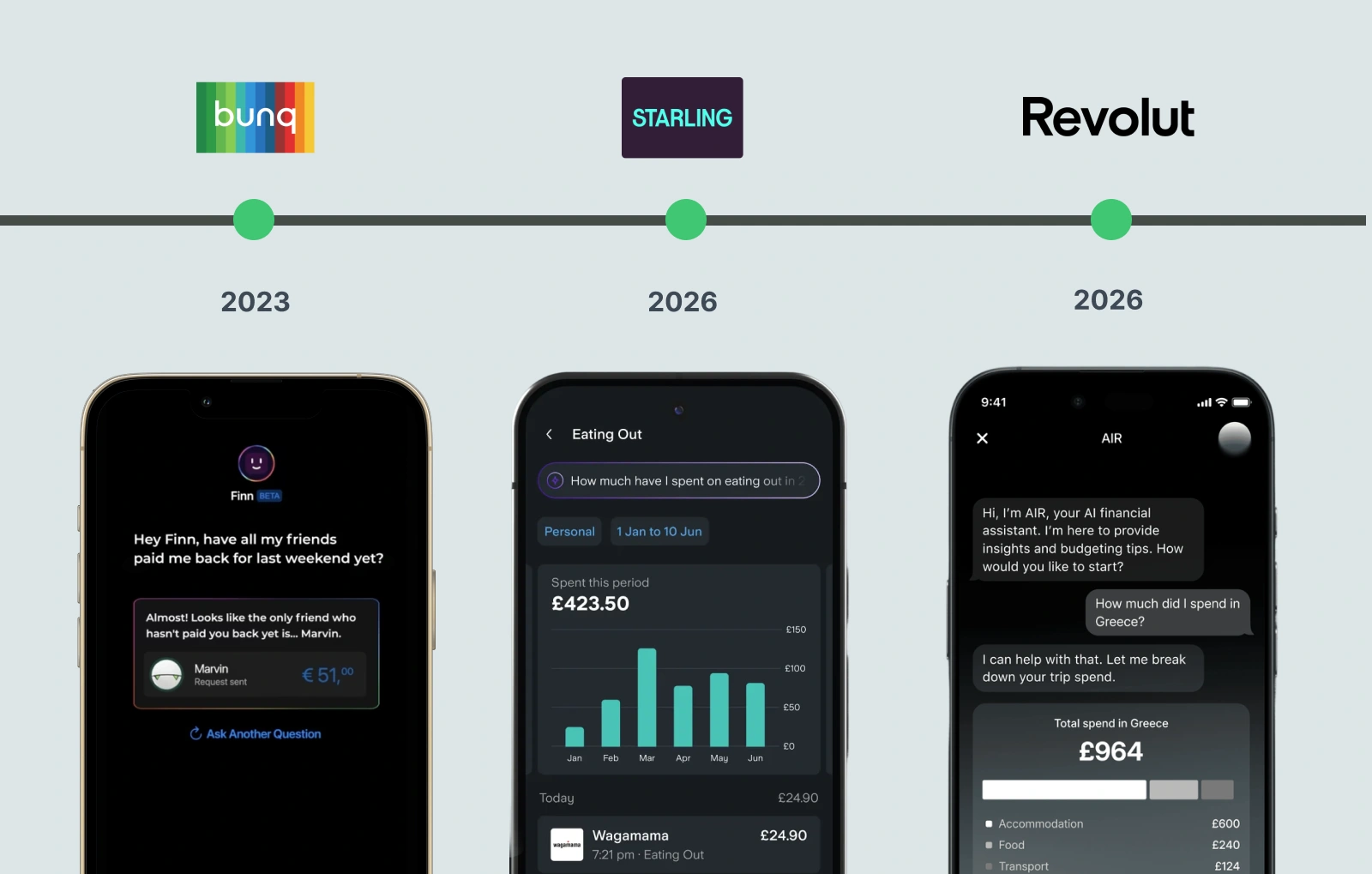
The smart path, in his framing, is to start with the baby lion. Teach it one thing. Earn trust. Then move on. Don't open with full AI autonomy in a heavily regulated environment - the regulatory and trust cost of getting it wrong is too high. He cites Revolut as the counter-example: a fully autonomous AI rollout in banking is a high-risk position to take, however technically impressive.
Ergomania's practical response to this state of affairs is an AI readiness questionnaire built specifically for banks. It maps three things: do they have AI in any meaningful form, who owns the AI features inside the organisation, and what is a realistic starting point given their regulatory and product maturity. Every bank answers differently. The questionnaire also maps what Ergomania calls sentient flows - user journeys designed to assemble dynamically rather than be pre-drawn in advance. It is the operational bridge between the design model and a product team's actual roadmap.
Three constraints that are non-negotiable
These are regulatory and trust constraints that apply to every bank, regardless of how ambitious their AI roadmap is.
- First, the user must be informed and must approve every consequential AI action. You cannot remove control from the user in a regulated banking environment. Every action the AI takes on the user's behalf has to be visible, traceable, and approvable.
- Second, the black box problem has to be solved. The user must be able to check the AI's reasoning, not just accept its output. Why did it suggest this? What data did it use? If the reasoning is vague, trust collapses on the first surprising recommendation.
- Third, control must have levels. Some users will want the AI to act broadly on their behalf; others will want narrow, supervised authority. The system should let users set their own depth of AI authority. Different segments of the customer base will sit at very different points on that spectrum.
The escalator principle
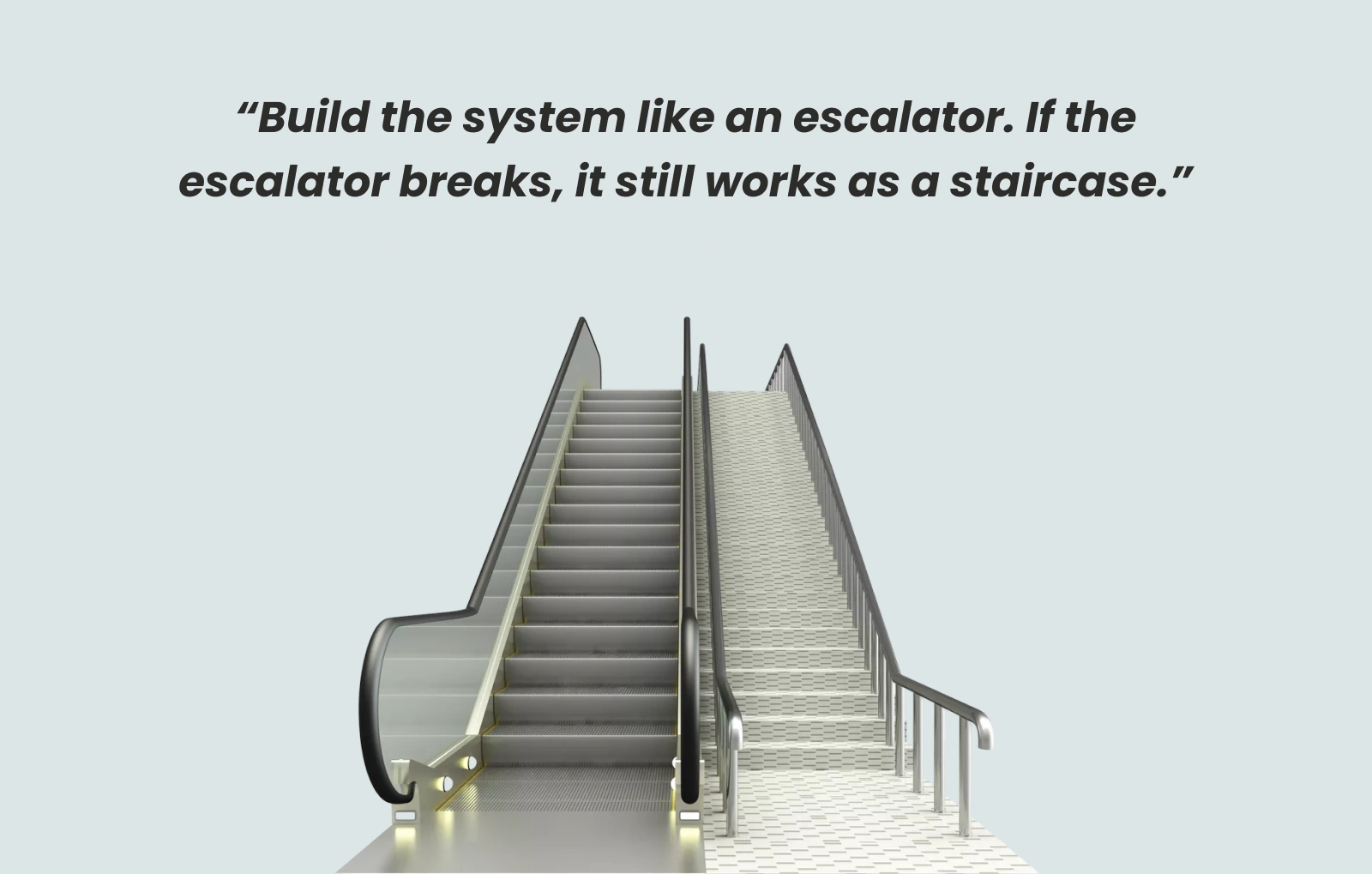
The design rule Adam applies here comes from Josh Clark. His book Sentient Design: Crafting Intelligent Interfaces with AI, published by Rosenfeld Media earlier this month, lays the principle out plainly: build the system like an escalator. If the escalator breaks, it still works as a staircase. There must always be a manual fallback at any point, for any reason, without the user losing what they've done. AI authority is additive - never load-bearing.
The AI wallet concept is how Adam illustrates this in a banking context. A sandboxed money pocket within the banking app where the user explicitly places funds and grants the AI authority to act on them within defined rules. Like having one pocket of EUR and another of HUF in Revolut - except one pocket is AI-managed, and the user chooses what goes in it and what the AI is allowed to do with it. The scope is opt-in, defined, and reversible.
To do any of this, the AI needs to observe the enriched transaction data. “Enriched” is the key part here. A test we ran on AI chatbots fed raw versus enriched transaction data found out that with raw data, the same large language model misidentified merchants, miscategorised spending, and produced generic or wrong advice. With enriched data, it segmented spending correctly, found recurring subscriptions, and surfaced specific, useful tips.
The same principle applies to sentient inference. If the underlying transaction data is miscategorised, the AI cannot detect a behavioural pattern deviation because the baseline is noise. It cannot identify financial stress if it cannot reliably tell a grocery shop from a restaurant. It cannot scope an AI wallet if it cannot distinguish rent from a discretionary purchase. Every sentient feature in Adam's framing is a downstream consequence of the data quality underneath. The cost of getting that wrong leads to missed cross-sell, broken chatbots, useless carbon insights, and disappearing trust.
This is the layer Tapix builds. Clean merchant identity by location, so the behavioural baseline is real. Accurate categorisation of every outflow, so spend pattern changes register as an accurate signal. Merchant deduplication across MIDs, so the same supermarket chain doesn't look like five different merchants. Transaction-level context per purchase. Reliable identification of recurring obligations, so the AI knows what is rent and what is discretionary. That is the enrichment stack the inference engine runs on. The lion needs to be fed; this is what it eats.
Banks that want to move on sentient design have a clear order of operations. Decide what the baby lion learns first. Set the three non-negotiables. Design the escalator. And, before any of it, get the transaction feed into a state the AI can actually read.